Home and clinic HBOT is spreading faster than outcome evidence in healthy adults: who should wait
Clinical hyperbaric oxygen therapy at 2.0 atmospheres absolute (ATA) with intermittent air breaks alters leukocyte telomere length and cerebral perfusion in small human trials, whereas mild soft-shell chambers at 1.3 ATA using concentrator air lack controlled evidence for systemic aging markers.
Separating hard-shell medical guides at 2.0 ATA from mild wellness chambers at 1.3 ATA, and what human trials actually measure.
LetsGo Care Editorial
Home and clinic HBOT is spreading faster than outcome evidence in healthy adults: who should wait
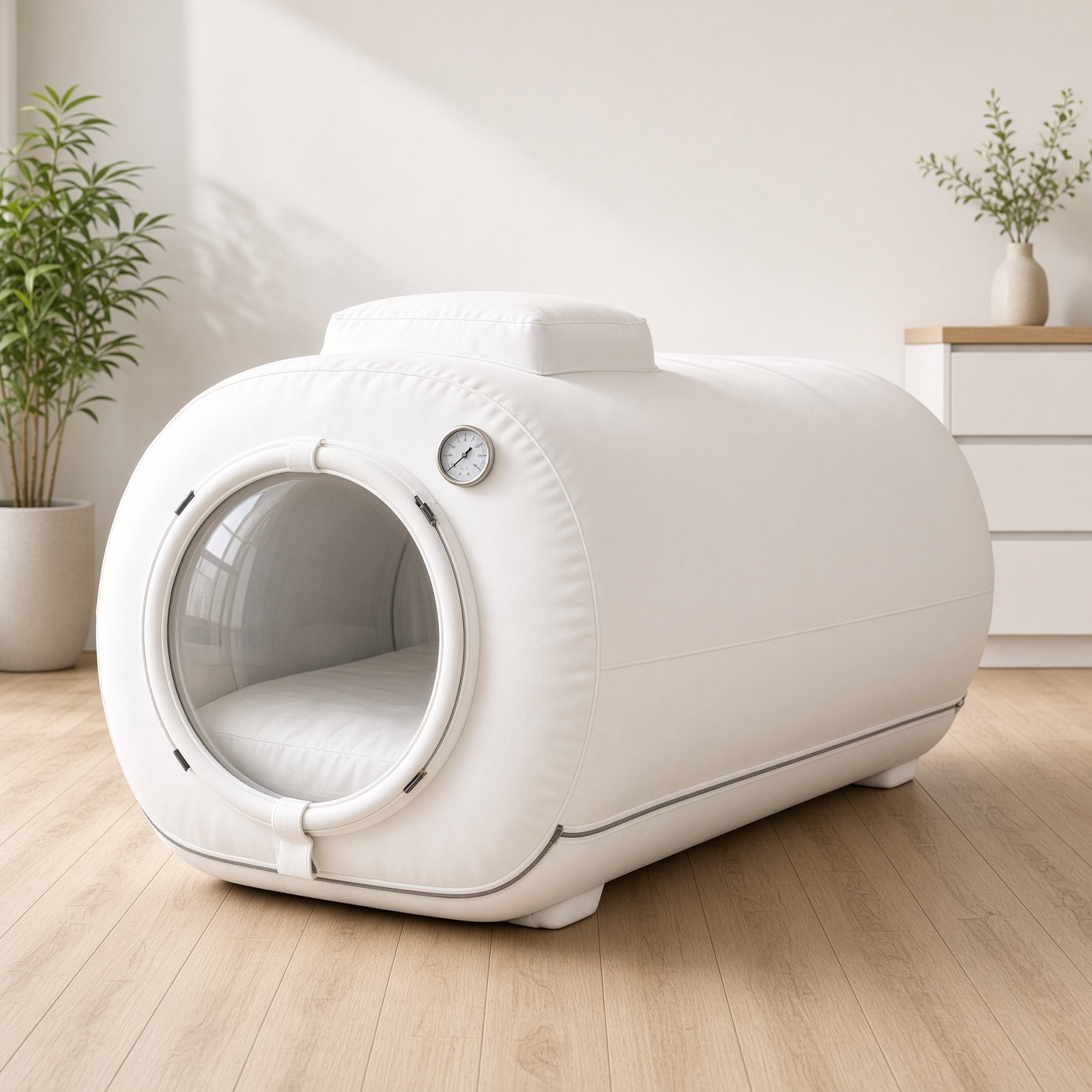
A soft-sided zip chamber at 1.3 atmospheres fed by a portable oxygen concentrator does not deliver the same physiological stimulus as a rigid medical chamber at 2.0 atmospheres with scheduled air breaks.
Hyperbaric oxygen therapy (HBOT) has migrated from hospital wound units and dive medicine centers into residential homes and commercial wellness spaces. The market conflates two distinct interventions: medical-grade hyperbaric oxygen delivered in rigid chambers at 2.0 to 2.4 atmospheres absolute (ATA) with 100% medical oxygen, and mild hyperbaric therapy delivered in soft-sided inflatable chambers at 1.3 to 1.5 ATA using compressed ambient air or an oxygen concentrator. While clinical HBOT has established indications for radiation tissue injury, non-healing diabetic ulcers, and carbon monoxide poisoning, its off-label use by healthy adults aged 40 to 65 targets cognitive preservation, microvascular repair, and cellular senescence. Evaluating whether HBOT modifies human aging requires separating pressure-dependent gas physics, the intermittent hyperoxic-hypoxic paradox, and the gap between peripheral blood biomarkers and hard clinical outcomes.
Key facts
- Medical HBOT operates at 2.0 to 2.4 ATA with 100% oxygen, raising arterial partial pressure of oxygen (PaO2) above 1,500 mmHg; mild soft chambers at 1.3 ATA with concentrator oxygen achieve much lower plasma oxygen tension.
- The biological trigger for angiogenesis and stem cell mobilization in human guides is not steady oxygen saturation, but the rapid drop in tissue oxygen during 5-minute air breaks—known as the hyperoxic-hypoxic paradox.
- A prospective single-arm human trial (n=35, 60 sessions at 2.0 ATA) reported a >20% increase in peripheral blood leukocyte telomere length and a 10–37% drop in senescent T-cells, reflecting rapid splenic clearance and CD34+ bone marrow mobilization rather than direct telomere elongation in solid organs.
- Middle ear barotrauma occurs in 2% to 17% of patients depending on pressure ramping speed and Eustachian tube function, while hyperoxic myopia is a frequent, reversible lens change after 20 to 60 daily sessions.
- Untreated pneumothorax is an absolute contraindication; chambers using 100% oxygen carry strict fire and static-electricity hazards governed by NFPA 99 and UHMS safety codes.
Who this is for
Adults aged 40 to 65 considering a 40-to-60-session clinical HBOT commitment for post-concussion recovery, radiation tissue injury, or microvascular cognitive decline, as well as individuals weighing the purchase of a home 1.3 ATA soft chamber against supervised 2.0 ATA hard-shell guides.
In this article
- What it is
- Why it is used
- How it helps
- Who should try it
- Measurements that show improvement
- Products and services
What it is
At sea-level atmospheric pressure (1.0 ATA, or 760 mmHg) breathing room air (21% oxygen), arterial hemoglobin is already 97% to 99% saturated, and dissolved plasma oxygen is roughly 0.3 mL per deciliter of blood. Additional oxygen cannot meaningfully bind to hemoglobin once saturation hits 100%. Hyperbaric oxygen therapy (HBOT)—the administration of supplemental oxygen inside a sealed chamber pressurized above 1.0 ATA—relies on Henry’s Law, which states that the amount of gas dissolved in a liquid is directly proportional to the partial pressure of that gas above the liquid. When a patient breathes 100% oxygen at 2.0 ATA, alveolar oxygen tension rises nearly tenfold, driving dissolved oxygen in plasma from 0.3 mL/dL to roughly 4.4 mL/dL. At 2.4 to 3.0 ATA, dissolved plasma oxygen reaches 5.5 to 6.8 mL/dL—enough to meet the basal metabolic oxygen demand of resting tissues entirely through plasma diffusion, without any contribution from hemoglobin-bound oxygen. Because plasma can traverse narrowed capillaries where red blood cells cannot pass, this pressure-driven gradient oxygenates ischemic or microvascularly compromised tissue. Hardware falls into two distinct regulatory and mechanical tiers:
- Hard-shell chambers (monoplace acrylic tubes or multiplace steel compartments): Rated for 2.0 to 3.0 ATA. They use plumbed 100% medical-grade liquid or cylinder oxygen and allow scheduled air breaks via a built-in breathing system (BIBS) mask where the patient switches between 100% oxygen and 21% room air while remaining under pressure.
- Mild hyperbaric chambers (mHBOT): Soft-sided polyurethane or canvas bags constrained by zippers, capped by relief valves at 1.3 ATA (or 1.5 ATA in composite models). They are pressurized with ambient room air via an oil-free compressor, and the occupant wears a nasal cannula or non-rebreather mask fed by a 5-to-10-liter-per-minute oxygen concentrator (delivering 90–93% oxygen diluted by mask leakage). A soft chamber at 1.3 ATA does not replicate the arterial PaO2 spikes or the steep step-down gradients of a 2.0 ATA clinical guide.
Why it is used
Undersea and Hyperbaric Medical Society (UHMS) and FDA-cleared indications cover 14 acute and chronic conditions, including decompression sickness, arterial gas embolism, severe carbon monoxide poisoning, delayed radiation injury (soft tissue and bony necrosis), compromised skin grafts, and Wagner Grade 3 or higher diabetic foot ulcers. In these emergencies and wound care pathways, the primary goal is reversing tissue hypoxia, reducing edema via hyperoxic vasoconstriction, and enhancing leukocyte oxidative killing of bacteria. Outside of hospital wound units, HBOT is used off-label in regenerative medicine for three main purposes:
- Neurocognitive preservation and post-injury recovery: Targeted by adults with persistent post-concussion syndrome, post-stroke deficits, or early microvascular age-related cognitive decline.
- Musculoskeletal and soft-tissue recovery: Used to accelerate tendon, ligament, or post-surgical healing by stimulating fibroblast proliferation and collagen synthesis.
- Systemic cellular aging guides: Popularized by clinical trials where healthy aging adults undergo 60 daily 90-minute sessions at 2.0 ATA over 12 weeks to modulate peripheral markers of immunosenescence, skin collagen density, and cerebral blood flow. Consumer adoption of home 1.3 ATA chambers is driven by convenience, lower per-session cost over time, and extrapolation from 2.0 ATA clinical literature. However, no randomized controlled trial has shown that a 1.3 ATA home guide produces the vascular or cellular shifts documented in 2.0 ATA hospital-grade studies.
How it helps
Continuous unremitting hyperoxia causes oxidative toxicity rather than tissue regeneration; clinical HBOT instead relies on the hyperoxic-hypoxic paradox (also termed the normobaric oxygen paradox when dropping back to starting point). In a standard regenerative guide—90 minutes at 2.0 ATA with 100% oxygen, interrupted every 20 minutes by a 5-minute break breathing 21% air—arterial oxygen tension swings from ~1,500 mmHg down to ~200 mmHg during the air break, and back to ~100 mmHg after decompression. Mammalian cells sense oxygen oscillations rather than absolute oxygen levels alone. During prolonged hyperoxia, cells upregulate endogenous antioxidant scavengers (via Nrf2 activation, increasing superoxide dismutase, catalase, and glutathione peroxidase) to buffer reactive oxygen species (ROS). When the patient removes the oxygen mask for a 5-minute air break, tissue oxygen drops rapidly while antioxidant scavenger levels remain high. This sudden drop in free ROS mimics cellular hypoxia, preventing prolyl hydroxylase domain (PHD) enzymes from tagging Hypoxia-Inducible Factor 1-alpha (HIF-1α) for degradation. Stabilized HIF-1α translocates to the nucleus and triggers downstream transcription shown in both human biopsies and animal models:
- Angiogenesis: HIF-1α upregulates Vascular Endothelial Growth Factor (VEGF), promoting capillary budding in ischemic brain and dermal tissue. In a human skin biopsy sub-study (prospective cohort, n=13 healthy older adults, 60 sessions at 2.0 ATA over 90 days), papillary dermis blood vessel density increased and elastic fiber fragmentation decreased.
- Stem cell mobilization: Hyperoxia activates endothelial nitric oxide synthase (eNOS) in bone marrow, releasing nitric oxide (NO) that cleaves the SDF-1/CXCR4 bond tethering hematopoietic and endothelial progenitor cells (CD34+) to the marrow stroma. Human peripheral blood assays (prospective clinical study, n=26 patients undergoing 20 treatments at 2.0 ATA) show an 8-fold increase in circulating CD34+ stem cells.
- Mitochondrial biogenesis: Through Sirtuin-1 (SIRT1) and PGC-1α signaling, repeated hyperoxic-normoxic cycles stimulate mitochondrial proliferation in human skeletal muscle and neural tissue. A critical distinction applies to the widely publicized human finding on telomeres and senescent cells (single-arm prospective trial, n=35 adults aged 64+, 60 sessions at 2.0 ATA over 90 days). The study reported a >20% increase in leukocyte telomere length (most pronounced in B cells) and a 10% to 37% reduction in senescent T-helper and cytotoxic T-cells (CD28-null, CD57+). Rather than HBOT directly lengthening telomeres inside stationary post-mitotic organs like the heart or brain via telomerase, this rapid 90-day jump in peripheral blood leukocytes reflects lymphocyte turnover: oxidative stress triggers apoptosis and splenic clearance of fragile, senescent circulating immune cells with critically short telomeres, which are simultaneously replaced by newly mobilized, naive bone marrow progenitor cells bearing longer starting point telomeres. Peripheral blood telomere shifts after HBOT act as a marker of immune cell population renewal rather than proof of whole-body solid-organ rejuvenation.
Who should try it
Randomized controlled trials support clinical HBOT (2.0 ATA with air breaks) for adults who have a specific microvascular or hypoxic target rather than asymptomatic individuals seeking primary prevention:
- Adults aged 50+ with documented cerebral hypoperfusion or mild vascular cognitive impairment: A randomized controlled trial in healthy older adults (n=63, 60 sessions at 2.0 ATA over 90 days vs. non-intervention control) demonstrated increased regional cerebral blood flow on dynamic susceptibility contrast MRI, alongside measurable gains in attention, information processing speed, and executive function. No reliable across-trial numeric effect size is established for cognitive scores in healthy adults due to small sample sizes and lack of sham control in key aging trials.
- Persistent post-concussion syndrome (PPCS) or mild traumatic brain injury (mTBI): Multiple RCTs show cognitive and symptom improvements when 1.5 to 2.0 ATA guides are applied months to years after injury, though sham-controlled military trials have debated how much effect comes from low-pressure air compression alone.
- Delayed radiation tissue injury (e.g., proctitis, cystitis, or osteoradionecrosis following pelvic or head-and-neck cancer radiotherapy): Established clinical indication supported by RCTs and meta-analyses. Contraindications and drug interactions:
- Absolute contraindication: Untreated pneumothorax. Under pressure, trapped pleural air compresses according to Boyle’s Law; during decompression, that air expands rapidly and converts a simple pneumothorax into a fatal tension pneumothorax.
- Relative contraindications requiring specialist clearance: Severe chronic obstructive pulmonary disease (COPD) with CO2 retention or pulmonary bullae (risk of pulmonary barotrauma and arterial gas embolism), active upper respiratory or sinus infections (inability to equalize middle ear pressure), uncontrolled seizure disorders (lowered threshold for central nervous system oxygen toxicity), claustrophobia, and congenital spherocytosis.
- Ocular contraindications: Existing nuclear sclerotic cataracts. HBOT accelerates cataract maturation, whereas it induces temporary myopia in healthy lenses.
- Drug interactions: Prior bleomycin exposure (historical risk of pulmonary fibrosis under high oxygen tension requiring specialist evaluation), concurrent doxorubicin (cardiotoxicity), disulfiram (blocks superoxide dismutase, increasing oxygen toxicity risk), and cis-platinum (impaired wound tensile strength). Trade-offs and opportunity cost: A full regenerative guide requires 40 to 60 sessions, five days a week for 8 to 12 weeks, taking 90 to 120 minutes per visit. At private facilities, 60 sessions inside a hard-shell chamber cost between $15,000 and $35,000 out of pocket. For an asymptomatic 45-year-old with normal cerebral perfusion and high cardiorespiratory fitness, 100 hours spent inside a hyperbaric chamber carries a substantial opportunity cost compared to structured zone-2 and VO2max aerobic training, which stimulates VEGF, eNOS, and mitochondrial biogenesis without risk of barotrauma or lens changes.
Measurements that show improvement
Objective biomarker and functional tracking before session 1 and 2 to 4 weeks after completing a 40-to-60-session block is necessary to separate physiological response from placebo effects: 1. Neurocognitive and perfusion markers:
- Computerized cognitive testing (e.g., NeuroTrax, CNS Vital Signs): Track standardized domains of information processing speed (millisecond reaction latency) and executive attention before session 1 and 2–4 weeks post-completion; improvement is indicated by reduced reaction latency and higher composite domain scores.
- Perfusion MRI (Arterial Spin Labeling or Dynamic Susceptibility Contrast MRI): Quantifies regional cerebral blood flow (mL/100g/min) in the prefrontal cortex and hippocampus; a positive response is an upward shift in regional perfusion. 2. Systemic inflammation and metabolic markers:
- High-sensitivity C-reactive protein (hs-CRP): In individuals with elevated starting point systemic inflammation (>1.5 mg/L), a downward shift toward <0.8 mg/L at 4 weeks post-guide reflects reduced inflammatory cytokine signaling, whereas measurements taken immediately after a session may transiently rise due to acute oxidative stress.
- Fasting insulin and HOMA-IR: Small human trials in metabolic syndrome and type 2 diabetes demonstrate lower fasting insulin and reduced HOMA-IR scores following multi-week HBOT blocks. 3. Autonomic and cardiorespiratory tracking:
- Heart Rate Variability (HRV, measured as nocturnal RMSSD in milliseconds) and Resting Heart Rate (RHR): Hyperoxia triggers acute parasympathetic vagal activation and bradycardia during the session. Long-term upward shifts in starting point nocturnal RMSSD indicate improved autonomic recovery, whereas a sustained drop in HRV alongside rising RHR signals cumulative oxidative fatigue.
- VO2max (mL/kg/min) and ventilatory thresholds: Measured via cardiopulmonary exercise testing (CPET). In a double-blind randomized sham-controlled trial of master athletes aged 40–50 (n=37, 40 sessions at 2.0 ATA over 8 weeks), VO2max increased by 2.83 mL/kg/min alongside elevated skeletal muscle mitochondrial respiration on biopsy. 4. Safety and adverse effect monitoring:
- Visual acuity (Snellen chart and manifest refraction): Track at starting point and every 20 sessions. A myopic shift of -0.5 to -3.0 diopters (worsening distance vision, sometimes temporarily improving near reading vision in presbyopic adults) is common due to oxidative conformational changes in crystalline lens proteins; it reverses within 6 to 12 weeks after finishing therapy.
- Otoscopic examination: Evaluates tympanic membrane erythema or hemotympanum (Teed grading scale 0–4) if ear fullness or pain develops. Within LetsGo physician-led programs, biological age composites and functional performance metrics are anchored to starting point pathology and cardiorespiratory capacity first; if a member pursues an external 2.0 ATA HBOT guide for cognitive or post-injury indications, pre- and post-intervention biomarker panels, CPET, and cognitive starting points are used to verify whether the capital and time investment produced an objective change.
Products and services
These LetsGo products and services sit next to this subject. They are not a prescription. A link is not evidence that the product causes the change discussed above. - Hyperbaric wellness pod — A chamber for clinics. A session is not a supplement and not a proven healthspan protocol. - LetsGo programmes — Coached programmes. Not a clinic menu and not a promise of a result.
Frequently asked questions
Is a 1.3 ATA soft-shell home chamber equivalent to doing more sessions of 2.0 ATA clinical HBOT?
No. Gas dissolution in plasma follows linear partial-pressure physics, while cellular signaling (such as HIF-1α stabilization and CD34+ stem cell release) exhibits threshold behavior that relies on steep drops in oxygen tension during 100%-to-21% air breaks at 2.0 ATA. Doing 100 hours at 1.3 ATA with a portable oxygen concentrator does not achieve the ~1,500 mmHg arterial oxygen tension or the rapid step-down gradient generated in a 2.0 ATA hard chamber.
Why can HBOT cause blurry distance vision, and is it permanent?
Hyperoxic myopia occurs in 20% to 50% of adults completing 40 to 60 daily sessions at 2.0 ATA. High oxygen tension alters the refractive index of the crystalline lens, making the eye temporarily nearsighted (and sometimes allowing middle-aged adults to read without reading glasses). In healthy lenses, this shift resolves within 6 to 12 weeks after stopping therapy. However, in individuals with pre-existing cataracts, HBOT can permanently accelerate cataract progression.
What are the fire risks inside a hyperbaric chamber?
In a chamber pressurized with 100% oxygen (monoplace hard chambers) or where oxygen concentrators leak into the ambient enclosure, the ignition temperature of materials drops sharply and flames propagate rapidly. Strict clinical guides ban electronics, lithium-ion batteries, synthetic clothing, petroleum-based skin lotions, and alcohol-based deodorants inside the chamber, and require grounding straps to prevent static sparks.
How long do the cognitive or vascular benefits of a 60-session guide last?
Long-term durability data in healthy aging adults are limited. Follow-up evaluations from clinical trials indicate that newly formed microvasculature (angiogenesis) persists for 6 to 12 months, whereas circulating stem cell counts return to starting point shortly after the guide ends. Without ongoing cardiovascular exercise and metabolic control, microvascular gains gradually regress.
Practical takeaways
- Verify hardware and guide before paying: require a hard-shell unit operating at 2.0 ATA or higher with 100% medical oxygen and scheduled 5-minute room-air breaks (21% O2) every 20 minutes via a BIBS mask, rather than a soft zip chamber capped at 1.3 ATA.
- Rule out pulmonary air trapping before session 1: obtain a starting point chest X-ray or low-dose CT if you have any history of lung disease, spontaneous pneumothorax, or smoking to exclude asymptomatic pulmonary bullae.
- Track ocular refraction every 20 sessions: get a starting point slit-lamp eye exam to exclude nuclear sclerotic cataracts, pause therapy if a myopic shift exceeds -2.5 diopters, and wait at least 8 to 12 weeks after the final session before updating eyeglass prescriptions.
- Stop compression immediately if ear pain develops: perform Valsalva or Toynbee equalization every 1 to 2 psi during pressurization, and abort the session if tympanic pain persists (Teed grade 2 or higher on otoscopy) or if an upper respiratory infection is present.
- Measure objective response at starting point and 4 weeks post-guide: track CPET VO2max (target gain >=2.0 mL/kg/min), hs-CRP (target <0.8 mg/L), nocturnal HRV (RMSSD in ms), and computerized cognitive reaction time to verify treatment efficacy.
Sources and evidence notes
- Hachmo Y et al., Aging (2020). Prospective clinical trial (n=35 healthy adults aged 64+) examining 60 daily HBOT sessions at 2.0 ATA with air breaks on peripheral blood leukocyte telomere length and immunosenescent T-cell populations.
- Hadanny A et al., Aging (2020). Randomized controlled clinical trial (n=63 healthy older adults) evaluating the effect of a 60-session 2.0 ATA HBOT guide on cerebral blood flow via perfusion MRI and computerized cognitive performance.
- Hadanny A et al., Sports Medicine - Open (2022). Double-blind randomized sham-controlled trial (n=37 master athletes aged 40–50) measuring the impact of 40 HBOT sessions on VO2max, anaerobic threshold, and skeletal muscle mitochondrial respiration.
- Thom SR et al., American Journal of Physiology - Heart and Circulatory Physiology (2006). Human clinical and mechanistic study demonstrating that 2.0 ATA hyperbaric oxygen mobilizes bone marrow-derived CD34+ stem/progenitor cells via a nitric oxide-dependent pathway.
- Undersea and Hyperbaric Medical Society (UHMS) Indications Manual. Clinical reference standards defining approved medical indications, pressure parameters (ATA), oxygen toxicity limits, barotrauma incidence, and NFPA 99 chamber fire safety regulations.
Safety note
Hyperbaric oxygen therapy is a pressurized medical intervention that carries risks of middle ear and sinus barotrauma, reversible hyperoxic myopia, cataract acceleration, claustrophobia, rare central nervous system oxygen toxicity (seizures at high pressures), and rare pulmonary barotrauma. Untreated pneumothorax is an absolute contraindication. Chambers utilizing supplemental oxygen require strict fire-prevention controls against static electricity, electronics, and flammable personal care products.
Disclaimer
This article is for educational and informational purposes only and does not constitute medical advice, diagnosis, or treatment. Hyperbaric oxygen therapy for longevity or cognitive enhancement in healthy adults is an off-label use. Always consult a qualified physician trained in hyperbaric medicine before beginning any pressurized therapy.
Clinical hyperbaric oxygen therapy at 2.0 ATA with structured air breaks is a potent physiological stimulus that leverages the hyperoxic-hypoxic paradox to drive angiogenesis, mobilize bone marrow progenitor cells, and increase regional cerebral blood flow in human trials. However, commercial wellness marketing blurs the line between these physician-supervised 60-session hard-shell guides and mild 1.3 ATA soft-chamber sessions that lack clinical outcome evidence. For adults aged 40 to 65, HBOT is not a substitute for aerobic conditioning, but a targeted, time-intensive medical intervention reserved for specific microvascular, neurocognitive, or tissue-repair indications where documented benefits outweigh barotrauma risks, ocular shifts, and capital cost.
More on Hyperbaric Therapy
Hyperbaric Therapy
Clinical 2.0 ATA Hyperbaric Oxygen Therapy vs. 1.3 ATA Mild Chambers: Evidence, Mechanisms, and Biomarkers
Medical hyperbaric oxygen therapy at 2.0 ATA with intermittent 100% oxygen air breaks alters peripheral blood mononuclear cell telomere length and cerebral perfusion in small human trials, whereas mild 1.3 ATA soft…
Hyperbaric Therapy
Home and clinic HBOT is spreading faster than outcome evidence in healthy adults: what to ask before you pay
Medical hyperbaric oxygen therapy at 2.0 atmospheres absolute with intermittent 100% oxygen shifts peripheral blood telomere markers in small human trials, whereas mild soft-shell chambers at 1.3 ATA lack clinical…
Hyperbaric Therapy
Does hyperbaric oxygen therapy improve cellular aging or recovery in healthy adults?
Medical-grade hyperbaric oxygen therapy (2.0 ATA with 100% oxygen and intermittent air breaks) drives hypoxia-inducible factor-1 alpha (HIF-1α) and vascular endothelial growth factor (VEGF) expression in human tissue,…