Clinical 2.0 ATA Hyperbaric Oxygen Therapy vs. 1.3 ATA Mild Chambers: Evidence, Mechanisms, and Biomarkers
Medical hyperbaric oxygen therapy at 2.0 ATA with intermittent 100% oxygen air breaks alters peripheral blood mononuclear cell telomere length and cerebral perfusion in small human trials, whereas mild 1.3 ATA soft chambers lack clinical outcome data for healthy aging.
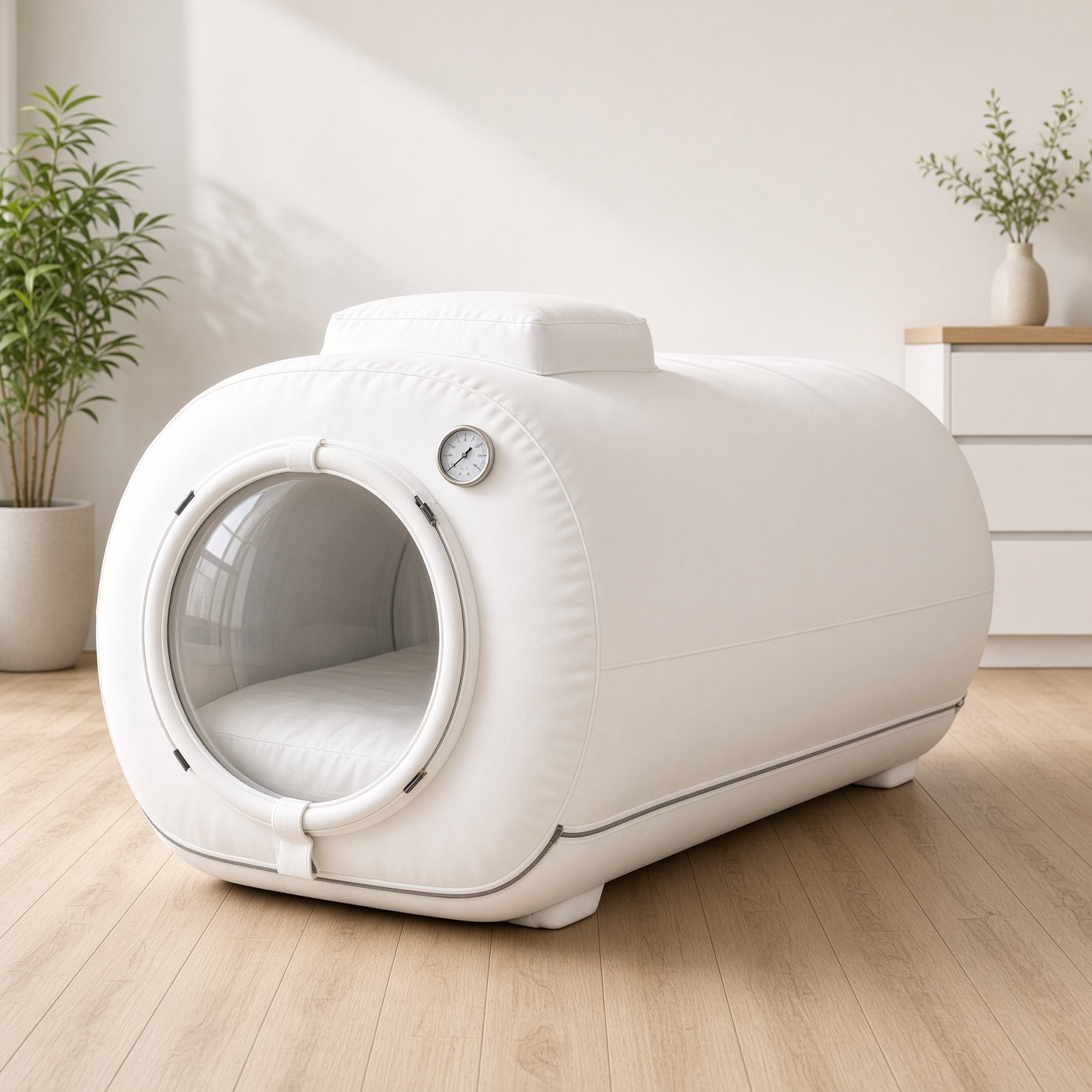
Separating medical-grade hard-shell guides at 2.0 ATA from mild soft-shell chambers at 1.3 ATA.
LetsGo Care Editorial
Clinical 2.0 ATA Hyperbaric Oxygen Therapy vs. 1.3 ATA Mild Chambers: Evidence, Mechanisms, and Biomarkers
A soft-sided zip-up bag pressurized to 1.3 atmospheres with an oxygen concentrator does not deliver the same physiological stimulus as a rigid medical chamber operating at 2.0 atmospheres with 100% medical oxygen and timed air breaks.
Hyperbaric oxygen therapy (HBOT) is an established hospital intervention for decompression sickness, carbon monoxide poisoning, radiation tissue injury, and non-healing diabetic ulcers. Commercial expansion of hyperbaric chambers into residential homes and clinics for cognitive decline, athletic recovery, and biological aging outpaces human outcome evidence in healthy adults. Evaluating what hyperbaric exposure achieves requires separating two fundamentally different modalities that share a name: medical-grade hard-shell HBOT operating at 2.0 to 3.0 atmospheres absolute (ATA) with 100% oxygen, and mild hyperbaric therapy (mHBOT) operating at 1.3 to 1.5 ATA using compressed ambient air or an oxygen concentrator.
Key facts
- Medical HBOT uses rigid chambers pressurized to 2.0–3.0 ATA with 100% medical oxygen, raising arterial oxygen partial pressure (PaO2) above 1,400 mmHg.
- Mild soft-shell chambers typically operate at 1.3 ATA using compressed room air (21% O2) or a concentrator (up to 90–95% O2 via mask), producing a fraction of the plasma dissolved oxygen seen in hospital units.
- The primary longevity mechanism—the hyperoxic-hypoxic paradox—depends on rapid drops in tissue oxygen tension created by cycling between 100% oxygen and 21% room air breaks inside a high-pressure chamber, not sitting in continuous mild pressure.
- Human aging trials showing increases in peripheral blood mononuclear cell (PBMC) telomere length and reductions in senescent T-cells are small (30 to 70 older adults), require 60 ninety-minute sessions over 12 weeks, and have not demonstrated reductions in age-related disease incidence or mortality.
- Middle ear barotrauma occurs in roughly 2% to 17% of patients depending on pressure and coaching, and transient myopic shift affects 20% to 50% of adults completing 40 to 60 daily sessions.
Who this is for
Adults aged 40 to 65 evaluating clinic-based 2.0 ATA hyperbaric guides or considering purchasing a home mild hyperbaric chamber for cognitive performance, vascular health, or musculoskeletal recovery.
In this article
- What it is
- Why it is used
- How it helps
- Who should try it
- Measurements that show improvement
- Products and services
What it is
At sea level (1.0 atmosphere absolute, or ATA) breathing room air (21% oxygen), arterial hemoglobin is already 97% to 99% saturated with oxygen, and dissolved oxygen in blood plasma is minimal at roughly 0.3 mL of O2 per deciliter of blood. Because hemoglobin cannot carry additional oxygen once saturated, breathing 100% oxygen at normal atmospheric pressure yields only a modest increase in total blood oxygen content. Hyperbaric oxygen therapy overcomes this ceiling by administering breathable gas at an ambient pressure higher than 1.0 ATA.
Pressurizing the environment applies Henry's Law, which states that the amount of gas dissolved in a liquid is directly proportional to the partial pressure of that gas above the liquid. At 2.0 ATA breathing 100% oxygen, alveolar and arterial oxygen partial pressure (PaO2) rises from roughly 95–100 mmHg to over 1,400 mmHg. Dissolved plasma oxygen increases more than tenfold to approximately 4.4 mL/dL, and at 3.0 ATA it reaches roughly 6.0 mL/dL—enough dissolved oxygen in the fluid fraction of blood alone to meet resting tissue metabolic demand without any contribution from hemoglobin-bound oxygen.
Hyperbaric delivery divides into three distinct hardware tiers:
-
Clinical Hard-Shell Chambers (2.0 to 3.0 ATA): Constructed of steel or thick acrylic, either for a single occupant (monoplace, where the entire vessel is pressurized with 100% O2 or compressed air with an internal demand mask) or multiple occupants (multiplace, pressurized with compressed air while patients breathe 100% O2 through tight-fitting hoods or aviator-style built-in breathing system [BIBS] masks). These chambers allow precise switching between 100% O2 and 21% air breaks.
-
Intermediate Hard or Hybrid Chambers (1.5 to 2.0 ATA): Used in sports medicine and physician-led clinics. Some use medical-grade liquid oxygen or high-pressure cylinders; others rely on dual oxygen concentrators, which deliver only 90% to 95% purity at flow rates of 10 liters per minute and risk carbon dioxide rebreathing if poorly ventilated.
-
Mild Soft-Shell Chambers (1.3 to 1.5 ATA): Portable polyurethane or canvas zip-up enclosures pressurized with ambient room air via an oil-free compressor. Breathing ambient air inside a 1.3 ATA chamber yields an effective oxygen exposure equivalent to breathing roughly 27% oxygen at sea level. Adding an external oxygen concentrator connected to a nasal cannula or unsealed mask inside a soft chamber raises inspired oxygen, but it cannot replicate the PaO2 levels or the rapid gas-switching kinetics of a 2.0 ATA BIBS mask system.
Why it is used
The Undersea and Hyperbaric Medical Society (UHMS) recognizes 14 approved indications for clinical HBOT at 2.0 to 3.0 ATA. These include acute emergencies (decompression sickness, arterial gas embolism, acute carbon monoxide poisoning, central retinal artery occlusion, crush injuries, necrotizing soft tissue infections) and chronic hypoxic tissue states (delayed radiation injury to bone or soft tissue, diabetic lower-extremity ulcers, compromised skin grafts, refractory osteomyelitis, and sudden idiopathic sensorineural hearing loss).
Outside of hospital care, ambulatory adults aged 40 to 65 use hyperbaric sessions for four primary off-label goals:
- Cognitive performance and vascular brain aging: Reversing age-related declines in cerebral blood flow, processing speed, and executive function.
- Cellular senescence and biological aging biomarkers: Attempting to replicate trial findings regarding leukocyte telomere elongation and immunosenescence clearance.
- Musculoskeletal and post-surgical recovery: Accelerating the resolution of soft-tissue edema, tendinopathy, or post-operative bruising.
- Post-viral fatigue and autonomic dysfunction: Addressing persistent fatigue and neurocognitive symptoms following viral illnesses.
A frequent error in the commercial market is guide substitution. Consumers review peer-reviewed studies conducted in multiplace hospital chambers at 2.0 ATA for 60 sessions using 100% medical oxygen with five-minute air breaks every 20 minutes, and then purchase a 10-session package in a 1.3 ATA soft chamber breathing concentrator oxygen through a nasal cannula. No clinical trial data supports equating the cellular signaling of these two exposures.
How it helps
Intermittent exposure to 2.0 ATA hyperoxia triggers the hyperoxic-hypoxic paradox, a transcriptional signaling cascade demonstrated in both human trials and ex vivo human tissue analyses, alongside direct physics-driven tissue oxygenation.
First, hyperoxia creates a steep oxygen diffusion gradient from capillaries into hypoxic or hypoperfused tissue, driving dissolved oxygen 3 to 4 times further from the capillary lumen than occurs under normobaric conditions. Simultaneously, high arterial oxygen tension induces hyperoxic vasoconstriction in healthy tissues via endothelial nitric oxide scavenging without reducing net oxygen delivery, which decreases capillary hydrostatic pressure and reduces interstitial edema by roughly 20% in acute tissue injury models.
Second, transcriptional signaling is driven by the relative rate of decline in oxygen tension rather than absolute hypoxia. During a clinical guide at 2.0 ATA, tissue oxygen rises to supraphysiological levels for 20 minutes, followed by a 5-minute air break (21% O2 at 2.0 ATA). Although the tissue remains normoxic or mildly hyperoxic during the air break, the steep drop from extreme hyperoxia prevents prolyl hydroxylase domain (PHD) enzymes and Factor Inhibiting HIF (FIH) from hydroxylating and degrading Hypoxia-Inducible Factor 1-alpha (HIF-1alpha). Simultaneously, hyperoxia generates a brief surge of mitochondrial reactive oxygen species (ROS), which oxidizes cysteine residues on Kelch-like ECH-associated protein 1 (Keap1) and releases Nuclear factor erythroid 2-related factor 2 (Nrf2) to translocate to the nucleus.
In human clinical trials, repeating this intermittent cycle over 20 to 60 sessions activates three main downstream pathways:
- Angiogenesis and Microvascular Remodeling: Stabilized HIF-1alpha upregulates Vascular Endothelial Growth Factor (VEGF) and mobilizes CD34+ endothelial progenitor cells from bone marrow via an endothelial nitric oxide synthase (eNOS)-dependent mechanism. In human trials of patients undergoing 2.0 ATA treatments, 20 sessions double to triple circulating CD34+ stem/progenitor cells.
- Mitochondrial Biogenesis and Antioxidant Defense: Fluctuating oxygen tension and NAD+/NADH shifts activate Sirtuin 1 (SIRT1) and peroxisome proliferator-activated receptor gamma coactivator 1-alpha (PGC-1alpha), stimulating mitochondrial biogenesis, while nuclear Nrf2 upregulates endogenous antioxidant enzymes including heme oxygenase-1 (HO-1), superoxide dismutase (SOD), and catalase.
- Senescence and Telomere Dynamics: In a non-randomized prospective trial of 35 healthy independent adults aged 64 and older undergoing 60 daily 90-minute sessions at 2.0 ATA over 12 weeks (Hachmo et al., 2020), researchers reported a 20% to 38% increase in peripheral blood mononuclear cell (PBMC) telomere length and an 11% to 37% reduction in senescent T-helper and cytotoxic T-cells (CD28-null/CD57+).
Evaluating blood biomarkers versus solid tissue aging requires accounting for leukocyte compartmental shifting. Blood is a dynamic mixture of immune cell subsets of varying chronological maturity. Because HBOT mobilizes naive progenitor cells from the bone marrow and alters margination of older lymphocytes along vascular endothelium, an apparent jump in average blood telomere length over 90 days can reflect a change in the cellular composition of the peripheral blood draw—more newly mobilized cells with longer telomeres and fewer circulating late-stage differentiated T-cells—rather than telomerase-mediated chromosome lengthening inside post-mitotic solid organs like the brain, heart, or kidneys.
For brain aging, evidence relies on perfusion imaging rather than blood markers. A randomized controlled trial of 63 healthy older adults (Amir et al., 2020) completing 60 sessions at 2.0 ATA with intermittent air breaks over 12 weeks demonstrated statistically significant increases in regional cerebral blood flow (measured via Dynamic Susceptibility Contrast MRI) in the prefrontal cortex, superior parietal gyrus, and hippocampus, correlating with moderate improvements in cognitive domain scores for attention and information processing speed compared to a no-contact control group.
Who should try it
Completing a 60-session regenerative HBOT guide requires 90 to 120 hours of total time commitment across 12 weeks and costs between $15,000 and $35,000 at medical facilities, requiring strict candidate selection.
Appropriate candidates for clinical 2.0 ATA guides:
- Adults aged 50 and older with documented microvascular cerebral hypoperfusion, mild cognitive impairment (MCI) of vascular origin, or persistent post-concussion syndrome, following starting point neuroimaging and medical clearance.
- Patients recovering from radiation therapy, complex reconstructive surgery, or refractory non-healing wounds where HBOT is medically indicated.
- Adults with acute musculoskeletal injuries (such as grade II ligament sprains or poorly vascularized tendinopathies) seeking to accelerate return-to-play timelines over 10 to 20 sessions.
Who should skip it:
- Healthy 40-to-65-year-olds with normal cognitive function, high cardiorespiratory fitness, and low systemic inflammation seeking general prevention. The opportunity cost is substantial: 90 hours of structured Zone 2 aerobic training, high-intensity interval training (VO2max intervals), and progressive resistance training produces established reductions in all-cause mortality and systemic vascular adaptations at a fraction of the cost.
- Individuals considering sporadic 1.3 ATA soft-chamber sessions once or twice a week. Occasional mild hyperbaric exposure does not trigger the cumulative transcriptional cascade (HIF-1alpha, VEGF, angiogenesis) observed in 60-session daily 2.0 ATA clinical trials.
Absolute Contraindications:
- Untreated pneumothorax: Decompression causes life-threatening tension pneumothorax as trapped pleural gas expands according to Boyle's Law.
- Concurrent or prior use of specific chemotherapeutic agents: Bleomycin (risk of fatal interstitial pneumonitis), doxorubicin (cardiotoxicity), disulfiram (blocks superoxide dismutase, increasing oxygen toxicity risk), and cis-platinum (impaired wound healing).
Relative Contraindications and Side Effects:
- Severe bullous lung disease or poorly controlled asthma/COPD with air trapping, which increases the risk of pulmonary barotrauma and arterial gas embolism during decompression.
- Eustachian tube dysfunction or active upper respiratory/sinus infections, which prevent middle ear pressure equalization and cause middle ear barotrauma in 2% to 17% of patients.
- Claustrophobia, affecting 2% to 10% of monoplace chamber occupants.
- Lenticular refractive changes and cataracts: Hyperoxia cross-links crystalline lens proteins, inducing a transient myopic shift (nearsightedness) in 20% to 50% of patients completing 40 to 60 sessions. While myopia typically resolves within 6 to 12 weeks post-therapy, HBOT can permanently accelerate the maturation of pre-existing nuclear cataracts.
- Central Nervous System (CNS) oxygen toxicity: At pressures of 2.0 ATA and above, breathing 100% O2 carries a seizure risk of roughly 1 to 4 per 10,000 treatments, mitigated by enforcing 5-minute air breaks every 20 minutes.
- Fire hazard: Pressurized oxygen environments lower material ignition temperatures and accelerate flame propagation. Home chambers paired with ungrounded electronics, synthetic clothing, oil-based skin products, or uncertified oxygen concentrators present a lethal fire and explosion hazard.
Measurements that show improvement
starting point and post-guide biomarkers should be captured before starting a 40-to-60-session 2.0 ATA guide and repeated 2 to 4 weeks after the final session to allow acute hyperoxic oxidative stress to subside.
- Perfusion Neuroimaging: Arterial Spin Labeling (ASL) MRI or Dynamic Susceptibility Contrast (DSC) MRI to quantify regional cerebral blood flow in mL/100g/min within the prefrontal cortex and hippocampus, looking for increases in resting tissue perfusion.
- Cognitive Processing Speed and Attention: Validated computerized neurocognitive batteries (such as CNS Vital Signs or CANTAB) measuring reaction time, complex attention, executive function, and working memory. A clinically meaningful improvement requires a score increase exceeding 0.5 standard deviations above starting point to exceed test-retest practice effects.
- Cardiorespiratory Fitness (VO2max): Measured via cardiopulmonary exercise testing (CPET). In a randomized controlled trial of 37 older adults completing 60 HBOT sessions at 2.0 ATA, VO2max increased by roughly 1.5 to 2.0 mL/kg/min alongside improvements in anaerobic threshold and skeletal muscle mitochondrial mass compared to controls.
- Systemic Inflammation and Glycemic Control: High-sensitivity C-reactive protein (hs-CRP, tracking a reduction toward <0.8 mg/L if elevated at starting point), fasting insulin, and HOMA-IR. Small human trials in men with metabolic syndrome or type 2 diabetes demonstrate acute improvements in peripheral insulin sensitivity via skeletal muscle GLUT4 translocation following HBOT, though durability requires concurrent dietary and exercise maintenance.
- Autonomic Nervous System Balance: Nocturnal Heart Rate Variability (HRV, tracked as RMSSD in milliseconds) and resting heart rate (RHR) over 30-day rolling averages. During weeks 3 through 8 of a 60-session guide, RMSSD often dips transiently due to cumulative oxidative load, followed by a rebound above starting point 2 to 4 weeks post-completion.
- Ophthalmic Refraction: starting point and post-guide optometric refraction (measured in diopters) and slit-lamp examination to monitor myopic shifts and screen for early nuclear sclerotic cataract progression.
Products and services
These LetsGo products and services sit next to this subject. They are not a prescription. A link is not evidence that the product causes the change discussed above.
-
Hyperbaric wellness pod — A chamber for clinics. A session is not a supplement and not a proven healthspan protocol.
-
LetsGo programmes — Coached programmes. Not a clinic menu and not a promise of a result.
Frequently asked questions
Is a 1.3 ATA soft home chamber effective for longevity if I use it every day?
No randomized human trial evidence shows that daily use of a 1.3 ATA soft chamber extends healthspan, alters cellular senescence markers, or induces cerebral angiogenesis in healthy adults. While 1.3 ATA slightly increases dissolved plasma oxygen, it does not generate the arterial oxygen partial pressures (>1,200 mmHg) or the steep hyperoxic-to-normoxic drops required to trigger the HIF-1alpha and CD34+ stem cell mobilization cascade documented in 2.0 ATA clinical trials.
Why are 5-minute air breaks necessary during a hyperbaric session?
Air breaks serve two functions. First, switching from 100% oxygen to 21% medical air every 20 minutes reduces the risk of central nervous system oxygen toxicity (seizures) and pulmonary oxygen toxicity. Second, the sudden drop in alveolar oxygen tension during the air break causes cellular oxygen sensors (PHD enzymes) to perceive relative hypoxia, stabilizing HIF-1alpha and driving regenerative gene expression without subjecting tissues to actual damaging hypoxia.
Can hyperbaric oxygen therapy damage my eyesight?
Yes, temporarily in most cases, and permanently if cataracts are already present. High oxygen pressure cross-links proteins in the crystalline lens, causing a myopic shift (nearsightedness) in 20% to 50% of middle-aged and older adults undergoing 40 to 60 sessions. Distance vision typically returns to starting point within 6 to 12 weeks after completing therapy, but repeated hyperbaric oxygen exposure can permanently accelerate the maturation of pre-existing nuclear cataracts.
How many sessions are required to see vascular or cognitive changes?
Acute wound care or sports edema guides typically use 5 to 15 sessions. For microvascular remodeling (angiogenesis) and cerebral perfusion changes in older adults, published human trials utilize 40 to 60 ninety-minute sessions delivered 5 days per week over 8 to 12 weeks.
Can I bring my phone or tablet inside a hyperbaric chamber?
In a monoplace chamber pressurized with 100% oxygen, lithium-ion batteries and uncertified consumer electronics are strictly prohibited due to catastrophic fire and explosion risk. In multiplace chambers pressurized with compressed room air (where 100% oxygen is delivered only through a sealed hood or mask), facility-approved devices or books are permitted only under strict static-electricity and oxygen-leak monitoring guides.
Practical takeaways
- Verify hardware and gas specifications before booking: require a rigid chamber operating at 2.0 ATA, delivering 100% medical-grade oxygen via a sealed hood or BIBS mask, with timed 5-minute air breaks (21% O2) every 20 minutes.
- Complete a pulmonary and otologic clearance before starting 2.0 ATA therapy, including spirometry or a chest radiograph to rule out asymptomatic lung bullae, and an otoscopic exam to confirm middle ear equalization.
- Record a starting point optometric refraction (in diopters) before starting a 40-to-60-session guide, and stop therapy immediately if slit-lamp examination reveals early nuclear cataract progression.
- Track nocturnal HRV (RMSSD in ms), resting heart rate, hs-CRP, and computerized cognitive processing speed at starting point and 4 weeks post-completion; discontinue future blocks if target cognitive or perfusion markers do not improve by at least 0.5 standard deviations.
- Reallocate the $15,000–$35,000 and 90-hour commitment of a 60-session HBOT guide to supervised cardiorespiratory training if starting point VO2max is below the 75th percentile for your age and sex.
Sources and evidence notes
- Hachmo et al., Aging (2020). Prospective trial of 35 healthy adults aged 64+ undergoing 60 sessions of HBOT at 2.0 ATA showing changes in PBMC telomere length and senescent T-cell populations.
- Amir et al., Aging (2020). Randomized controlled trial of 63 healthy older adults demonstrating increased cerebral blood flow via perfusion MRI and improved cognitive processing speed and attention after 60 sessions at 2.0 ATA.
- Hadanny et al., Biomolecules (2020). Mechanistic review of the hyperoxic-hypoxic paradox, detailing HIF-1alpha, VEGF, SIRT1, and Nrf2 signaling dynamics during intermittent hyperoxia.
- Thom et al., American Journal of Physiology (2006). Foundational human and preclinical study demonstrating bone marrow stem/progenitor cell (CD34+) mobilization via nitric oxide-dependent mechanisms following 2.0 ATA HBOT.
- Undersea and Hyperbaric Medical Society (UHMS) Indications Report (14th Edition). Clinical standards defining medical-grade HBOT (>=2.0 ATA with 100% O2), approved clinical indications, barotrauma incidence, ocular side effects, and fire safety regulations.
Safety note
Never enter a hyperbaric chamber if you have an untreated pneumothorax, an active upper respiratory or sinus infection that prevents ear equalization, or a history of bleomycin chemotherapy. Ensure any clinic adheres to NFPA 99 (National Fire Protection Association) standards for hyperbaric facilities; never use battery-powered electronics, spark-producing items, or petroleum-based skincare products inside an oxygen-pressurized enclosure.
Disclaimer
This article is for educational and informational purposes only and does not constitute medical advice, diagnosis, or treatment. Hyperbaric oxygen therapy at clinical pressures is a prescription medical procedure with physical and biochemical risks. Always consult a qualified physician or certified hyperbaric medicine specialist before beginning any hyperbaric guide.
Hyperbaric oxygen therapy at 2.0 ATA with intermittent 100% oxygen air breaks is a physiological stressor that mobilizes CD34+ endothelial progenitor cells, stimulates cerebral angiogenesis, and shifts peripheral immune cell populations in small human trials of older adults. Those clinical findings do not validate mild 1.3 ATA soft-shell chambers, which lack the partial pressure gradients and gas-switching kinetics required to trigger regenerative vascular remodeling. For adults aged 40 to 65, medical-grade HBOT is a high-cost intervention best reserved for documented microvascular cognitive decline, radiation injury, or refractory tissue healing after cardiorespiratory fitness (VO2max) and metabolic health metrics are established.
More on Hyperbaric Therapy
Hyperbaric Therapy
Home and clinic HBOT is spreading faster than outcome evidence in healthy adults: what to ask before you pay
Medical hyperbaric oxygen therapy at 2.0 atmospheres absolute with intermittent 100% oxygen shifts peripheral blood telomere markers in small human trials, whereas mild soft-shell chambers at 1.3 ATA lack clinical…
Hyperbaric Therapy
Home and clinic HBOT is spreading faster than outcome evidence in healthy adults: who should wait
Clinical hyperbaric oxygen therapy at 2.0 atmospheres absolute (ATA) with intermittent air breaks alters leukocyte telomere length and cerebral perfusion in small human trials, whereas mild soft-shell chambers at 1.3…
Hyperbaric Therapy
Does hyperbaric oxygen therapy improve cellular aging or recovery in healthy adults?
Medical-grade hyperbaric oxygen therapy (2.0 ATA with 100% oxygen and intermittent air breaks) drives hypoxia-inducible factor-1 alpha (HIF-1α) and vascular endothelial growth factor (VEGF) expression in human tissue,…