Consumer panels and sauna-plus-red-light rooms outran the dose literature: cost against a four-week test
Clinical photobiomodulation depends on delivering specific wavelengths (typically 630–670 nm and 810–850 nm) at a precise fluence (joules per square centimetre) to cytochrome c oxidase; ambient exposure from uncalibrated gym or sauna panels rarely replicates trial parameters.
How wavelength, tissue irradiance, and mitochondrial cytochrome c oxidase govern whether red and near-infrared light produce a measurable physiological response.
LetsGo Care Editorial
Consumer panels and sauna-plus-red-light rooms outran the dose literature: cost against a four-week test
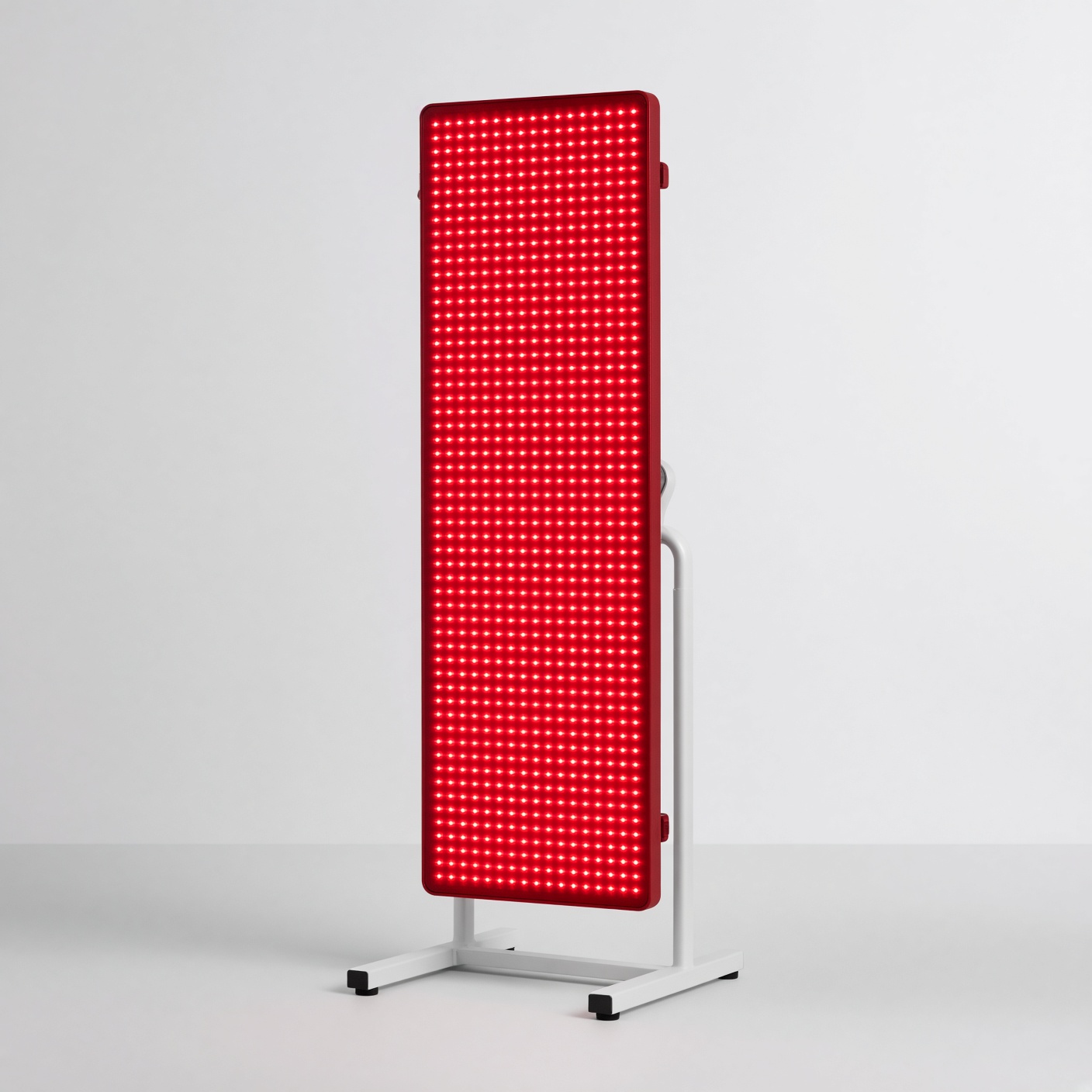
Standing in front of a glowing wall panel in a recovery room or infrared sauna does not automatically replicate a clinical photobiomodulation guide.
Red light therapy—known in medical literature as photobiomodulation (PBM) or low-level light therapy (LLLT)—uses non-ionizing light in the visible red (roughly 620–700 nm) and near-infrared (780–1100 nm) spectra to alter cellular function without heating tissue. While clinical trials show measurable effects in dermatology, hair growth, and localized musculoskeletal pain, those outcomes rely on strict optical parameters: exact wavelength, irradiance at the skin surface (measured in milliwatts per square centimetre, mW/cm²), and total energy density or fluence (measured in joules per square centimetre, J/cm²). Consumer wall panels and commercial sauna-plus-red-light rooms frequently conflate thermal infrared heating with non-thermal photobiomodulation, and rarely measure or report actual irradiance at the user's skin. Understanding the physics of light decay and the biphasic dose response separates plausible guides from expensive ambient lighting.
Key facts
- Primary mechanism: photons between 630–670 nm and 810–850 nm are absorbed by cytochrome c oxidase (Complex IV) in the mitochondrial electron transport chain, dissociating inhibitory nitric oxide and transiently increasing ATP synthesis (established in cell and animal models; inferred from human tissue oxygenation studies).
- Biphasic dose response (Arndt-Schulz curve): fluence below roughly 1 J/cm² at the target tissue produces no measurable effect, whereas excessive fluence (often above 50–100 J/cm² at the skin surface) inhibits cellular activity and blunts benefits.
- Optical decay: irradiance drops rapidly with distance and angle of incidence; moving from 5 cm to 50 cm away from a non-collimated LED panel can reduce delivered energy density by an order of magnitude.
- Strongest human evidence: randomized controlled trials (RCTs) support localized devices for androgenetic alopecia (increasing terminal hair density by roughly 15–20 hairs/cm² over 16–26 weeks) and facial photoaging (modest improvements in dermal collagen density and wrinkle depth over 8–12 weeks).
- Thermal vs non-thermal distinction: bundling red LEDs inside a heated sauna alters skin blood flow and induces sweating, which changes surface reflectance and introduces heat stress variables absent from clinical PBM trials.
Who this is for
Adults aged 40–65 evaluating targeted, non-invasive modalities for androgenetic alopecia, mild-to-moderate facial photoaging, superficial tendinopathies, or post-exercise muscle soreness—provided they are willing to adhere to strict distance, duration, and device-calibration parameters rather than relying on passive ambient exposure.
In this article
- What it is
- Why it is used
- How it helps
- Who should try it
- Measurements that show improvement
- Products and services
What it is
Photobiomodulation (PBM) is the application of monochromatic or narrow-band light from light-emitting diodes (LEDs) or low-power lasers to biological tissues to stimulate, heal, or protect cells without causing a significant temperature rise (typically less than 1°C). Clinical research focuses on two primary optical windows where tissue penetration is maximized and absorption by competing chromophores like melanin, hemoglobin, and water is minimized: 1. Visible Red Light (630–670 nm): Penetrates roughly 1 to 3 millimetres into the skin, reaching the epidermis and dermis. It is primarily used for superficial targets: dermal fibroblasts, hair follicles, and superficial wound healing. 2. Near-Infrared (NIR) Light (810–850 nm, and occasionally 904–1064 nm): Penetrates slightly deeper—roughly 3 to 10 millimetres in significant photon quantities, with trace photons reaching up to 2–3 centimetres depending on tissue composition and irradiance. NIR is used to target deeper subcutaneous tissue, joint capsules, tendons, and superficial skeletal muscle. The Consumer Dose Gap In clinical trials, light is typically delivered via contact probes, calibrated laser clusters held directly against the skin, or fitted helmets and masks with fixed diode-to-skin distances. By contrast, commercial recovery studios and home setups commonly use large freestanding LED panels or install red light strips inside heated saunas. Two physical realities prevent most ambient room setups from reproducing clinical study doses: Irradiance Misreporting: Manufacturers routinely advertise irradiance measured with a solar power meter (which overestimates narrow-band LED output by 50% to 100%) rather than a calibrated spectroradiometer or optical power meter. A panel advertised at 100 mW/cm² at 15 cm often delivers closer to 30–45 mW/cm² of true optical power. Distance and Reflectance: Uncollimated LED light diverges. Furthermore, bare human skin reflects 40% to 60% of incident red and NIR photons unless the light source is placed in direct contact with the skin. Sitting 60 to 100 cm away from a wall panel inside a sauna delivers a fraction of a joule per square centimetre—well below the threshold required to trigger a biological response.
Why it is used
In clinical and longevity contexts, red and near-infrared light are used across four distinct domains, ordered here from strongest to weakest human evidence: 1. Dermatology and Oncology Supportive Care (Established Clinical Evidence) High-fluence red light (as a component of photodynamic therapy when combined with a photosensitizer, or alone as non-thermal PBM) is used in clinical dermatology. Notably, multinational guidelines (such as those from the Multinational Association of Supportive Care in Cancer) recommend intraoral and extraoral PBM (typically 630–660 nm) to prevent and treat oral mucositis in patients undergoing radiotherapy or hematopoietic stem cell transplantation. In aesthetic dermatology, 630–660 nm combined with 830 nm LED arrays are used to reduce periorbital rhytids (wrinkles), calm inflammatory acne vulgaris, and accelerate recovery following ablative laser resurfacing. 2. Androgenetic Alopecia (Moderate-to-Strong Human Evidence) Low-level light therapy (typically 650–660 nm laser diodes or LEDs integrated into helmets, caps, or combs) is cleared by regulatory agencies as a non-pharmaceutical intervention for male and female pattern hair loss. Meta-analyses of sham-controlled RCTs (typically spanning 16 to 26 weeks with 50 to 200 participants per trial) consistently demonstrate increases in terminal hair count of roughly 15 to 20 hairs/cm² compared to sham devices. 3. Musculoskeletal Pain and Exercise Recovery (Moderate, Mixed Evidence) NIR light (810–850 nm or 904 nm super-pulsed lasers) is applied directly over tendons, joints, and large muscle groups (such as the quadriceps or biceps brachii) prior to or immediately after resistance exercise. Small RCTs and meta-analyses in athletes and older adults with knee osteoarthritis show modest reductions in visual analogue scale (VAS) pain scores (typically 10–20 mm on a 100 mm scale) and attenuated post-exercise rises in blood lactate and creatine kinase when probes are applied in direct skin contact. 4. Systemic Wellbeing, Sleep, and Circadian Alignment (Emerging / Weak Evidence) Consumer wellness marketing frequently positions whole-body red light panels as tools to improve sleep quality, systemic inflammation, or testosterone. No large, well-controlled human trials show that skin exposure to red light raises endogenous testosterone. Regarding sleep, evening exposure to dim red light does not suppress pineal melatonin secretion the way short-wavelength blue light (460–480 nm) does, making red ambient lighting useful for visual navigation before bed. However, standing in front of a high-intensity 10,000-lux red/NIR therapy panel immediately before sleep can still induce alertness or thermal changes; direct trials of PBM panels for insomnia are small (often fewer than 30 subjects) and lack rigorous sham controls.
How it helps
The mechanisms of photobiomodulation are well mapped in cell culture and rodent models, and partially validated in human tissue biopsies and near-infrared spectroscopy (NIRS) studies. Mitochondrial Photoacceptors and Cytochrome c Oxidase The primary photoacceptor for red and near-infrared light is cytochrome c oxidase (CCO), Complex IV of the mitochondrial respiratory chain, which contains two copper centres ($Cu_A$ and $Cu_B$) and two heme iron centres that absorb photons in the 600–700 nm and 760–900 nm ranges. Nitric Oxide Photodissociation: Under conditions of cellular stress, hypoxia, or aging, nitric oxide (NO) competitively binds to the binuclear centre of CCO, displacing oxygen and inhibiting electron transport. Absorption of red/NIR photons breaks the non-covalent bond between NO and CCO. This restores oxygen binding, increases mitochondrial membrane potential ($\Delta\Psi_m$), and accelerates adenosine triphosphate (ATP) synthesis (demonstrated in vitro and in animal models; human NIRS studies confirm localized increases in oxidized CCO and tissue oxygenation in superficial cortex and muscle). Local Vasodilation: The liberated nitric oxide diffuses out of the cell into the local microvasculature, acting on vascular smooth muscle via soluble guanylate cyclase to increase cyclic GMP (cGMP), triggering localized vasodilation and improved microcirculation. Retrograde Mitochondrial Signaling and Transcription Factors The transient burst in electron transport activity generates a brief, low-level spike in mitochondrial reactive oxygen species (ROS). In healthy cells, this small ROS pulse acts as a hormetic second messenger, activating redox-sensitive transcription factors such as NF-$\kappa$B (in a transient, cytoprotective manner) and Nrf2 (nuclear factor erythroid 2–related factor 2), which upregulates endogenous antioxidant enzymes including superoxide dismutase (SOD) and glutathione peroxidase. Simultaneously, in already inflamed tissue, PBM has been shown in preclinical models and human synovial fluid essays to downregulate pro-inflammatory cytokines including TNF-$\alpha$, IL-1$\beta$, and IL-6, while shifting macrophages from the pro-inflammatory M1 phenotype toward the reparative M2 phenotype. Extracellular Matrix and Ion Channels In dermal fibroblasts, red light (630–660 nm) stimulates transforming growth factor-beta (TGF-$\beta$) signaling, increasing procollagen type I and III synthesis while downregulating matrix metalloproteinase-1 (MMP-1, collagenase). At wavelengths above 900 nm, where water absorption increases, light also activates light- and heat-sensitive transient receptor potential (TRP) ion channels on cell membranes, modulating intracellular calcium ($Ca^{2+}$) flux. Non-Obvious Synthesis: The Biphasic Dose Response and the Sauna Paradox Biological responses to light follow the Arndt-Schulz curve (a biphasic dose response). At the target tissue, a fluence of roughly 3 to 10 J/cm² for superficial skin (requiring roughly 10 to 60 J/cm² at the skin surface for deeper targets to account for attenuation) stimulates ATP production and tissue repair. If the delivered dose is too low (e.g., sitting 1 metre away from a panel in a gym recovery room), the photon density cannot overcome starting point NO binding at CCO. Conversely, if the user presses their skin directly against a high-power panel for 20–30 minutes, delivering >100 J/cm², excessive ROS generation occurs, opening the mitochondrial permeability transition pore and inhibiting cellular benefits. Furthermore, combining red light panels inside a traditional or far-infrared sauna introduces confounding physiological variables. Sauna heat elevates core and skin temperature, triggers profuse sweating (creating a water film on the skin that scatters incident light and absorbs NIR wavelengths above 900 nm), and already drives maximal cutaneous vasodilation via thermal nitric oxide pathways. Using red light inside a sauna makes accurate optical dosing impossible and likely renders the photobiomodulation component redundant or ineffective compared to standalone, dry-skin, close-contact application.
Who should try it
Photobiomodulation is a localized, adjunctive physical modality, not a substitute for aerobic conditioning, resistance training, or metabolic pharmacotherapy. Best-Suited Candidates Adults with early-to-moderate androgenetic alopecia: Men (Norwood-Hamilton IIa–V) and women (Ludwig I–II) looking for a non-systemic intervention, either alone or stacked with topical minoxidil or 5-alpha-reductase inhibitors. Requires a dedicated scalp device (helmet or cap) used 3 to 7 times per week for at least 16–26 weeks. Individuals targeting facial photoaging or mild inflammatory dermatoses: Those seeking modest improvements in skin texture, erythema, and fine lines using a calibrated, close-proximity facial LED mask (633 nm + 830 nm) 3 to 5 times weekly. Athletes and active adults managing localized tendon or joint pain: Individuals with superficial tendinopathies (e.g., Achilles, patellar, or lateral epicondylitis) or knee osteoarthritis using a direct-contact NIR cluster probe before or after rehabilitation exercises. Contraindications and Precautions Active Malignancy: Do not apply PBM directly over known cancerous lesions or areas of suspected dysplasia; in vitro studies show PBM can stimulate proliferation in certain malignant cell lines. Photosensitizing Medications and Conditions: Contraindicated or requires physician clearance in individuals with lupus erythematosus, porphyria, or those taking photosensitizing drugs (including certain tetracyclines, fluoroquinolones, amiodarone, hydrochlorothiazide, isotretinoin, or St. John's Wort). Ocular Safety: High-intensity LEDs and lasers can cause retinal thermal or photochemical injury, and prolonged high-irradiance NIR exposure may contribute to cataractogenesis. Opaque blackout goggles should be worn when using high-output facial or full-body panels, unless executing a specific, physician-supervised ophthalmic guide at strictly limited low-irradiance parameters. Melasma and Darker Skin Phototypes (Fitzpatrick IV–VI): Visible red and high-irradiance NIR light ( especially if it generates mild skin heating) can trigger or worsen post-inflammatory hyperpigmentation and melasma in susceptible individuals. Thyroid and Pregnancy: Avoid direct high-dose application over the anterior neck (thyroid gland) if you have autoimmune thyroid disease or hyperthyroidism without endocrine monitoring, and avoid direct abdominal application during pregnancy due to a lack of safety data. Trade-Offs and Opportunity Cost Quality calibrated devices cost between $300 (for targeted masks/caps) and $1,500+ (for multi-panel arrays), and require 10 to 20 minutes of stationary adherence 3 to 5 days per week. If effects occur, they regress within weeks of stopping treatment. For a 45-to-65-year-old adult with limited time, 20 minutes spent standing still in front of an LED panel yields a vastly smaller return on systemic cardiometabolic health and biological aging than 20 minutes of Zone 2 aerobic training or progressive resistance exercise.
Measurements that show improvement
Because photobiomodulation acts locally rather than systemically, routine longevity blood panels (such as ApoB, HbA1c, or fasting insulin) will not move in response to red light therapy, and high-sensitivity C-reactive protein (hs-CRP) only shifts if PBM resolves a substantial focal inflammatory lesion. Tracking efficacy requires matching the biomarker or functional metric to the specific tissue targeted: Scalp and Hair Density: Standardised macro-photography (trichoscopy) at a fixed scalp landmark (e.g., vertex or frontal hairline) at starting point, 16 weeks, and 26 weeks. A meaningful response is a visible stabilization of miniaturization and an increase of 10–20 terminal hairs/cm². Dermal Remodeling: Standardised cross-polarized and parallel-polarized facial photography under identical lighting at starting point and 12 weeks, evaluating periorbital fine line depth and background erythema. In clinical settings, high-frequency cutaneous ultrasound measures dermal thickness and echogenicity. Musculoskeletal Recovery and Pain: Visual Analogue Scale (VAS) or WOMAC: Track daily pain on a 0–10 scale during a specific provocative movement (e.g., single-leg decline squat for patellar tendinopathy). A clinically meaningful reduction is at least 1.5 to 2 points over 4 to 8 weeks. Creatine Kinase (CK) and Delayed-Onset Muscle Soreness (DOMS): For athletes applying contact NIR to major muscle groups prior to eccentric loading, tracking 24-hour and 48-hour serum CK alongside isometric force recovery (e.g., via a handheld dynamometer or grip strength) can help verify whether the guide is blunting exercise-induced muscle damage. Autonomic and Sleep Metrics (Secondary): If using evening red light to replace overhead blue-enriched lighting, track sleep onset latency and nocturnal resting heart rate (RHR) or heart rate variability (HRV) via a validated wearable over a 2-week starting point versus a 2-week intervention window. If an evening high-power panel session decreases HRV or delays sleep onset, the dose or timing is overstimulating. Within a physician-led framework like a LetsGo coaching program or BioAge evaluation, localized therapies like PBM are logged alongside sleep architecture, orthopaedic function, and dermatological goals so uncalibrated wellness habits can be dropped if objective markers fail to improve after an 8-to-12-week trial.
Products and services
These LetsGo products and services sit next to this subject. They are not a prescription. A link is not evidence that the product causes the change discussed above. - Red light therapy panel — A panel for clinics and home recovery. Distance and time matter more than the brochure. - LetsGo programmes — Coached programmes. Not a clinic menu and not a promise of a result.
Frequently asked questions
Does a red light panel inside an infrared sauna provide the same benefit as a standalone clinical device?
Rarely. Most sauna red light setups place the user too far from the diodes to achieve a therapeutic fluence (3–10 J/cm²), and sweating creates a reflective and absorptive water layer on the skin. Furthermore, sauna heat already induces maximal cutaneous vasodilation and heat-shock responses, confounding the non-thermal mitochondrial pathways of photobiomodulation. Separate your sauna sessions from targeted, dry-skin red light therapy.
Should I apply red light before or after strength training?
Human exercise trials most consistently show benefits for muscle fatigue resistance and attenuated creatine kinase rises when near-infrared light (810–850 nm) is applied in direct contact with the target muscle group 15 to 30 minutes before exercise (muscular pre-conditioning). Post-exercise application can help manage localized soreness, though high-dose antioxidant or anti-inflammatory interventions immediately after lifting should be used judiciously if maximal hypertrophy signaling is the primary goal.
Can red light therapy increase vitamin D levels?
No. Vitamin D3 synthesis in the skin requires ultraviolet B (UVB) radiation between 290 and 315 nm to convert 7-dehydrocholesterol into pre-vitamin D3. Red and near-infrared devices (630–850 nm) emit zero UV radiation and have no effect on serum 25(OH)D levels.
How long should a typical red light therapy session last?
Session duration depends entirely on the true optical irradiance of the device at your exact distance. Using the formula Dose (J/cm²) = Irradiance (W/cm²) × Time (seconds): if a verified device delivers 30 mW/cm² (0.03 W/cm²) at 15 cm, reaching a superficial skin dose of 5 J/cm² takes about 167 seconds (under 3 minutes). Reaching 20 J/cm² at the skin surface to drive deeper near-infrared penetration takes roughly 11 minutes. Exceeding 15–20 minutes per area at close range risks crossing into the inhibitory zone of the biphasic dose curve.
Practical takeaways
- Verify wavelengths: choose devices with documented peak emissions in the 630–670 nm (red) and/or 810–850 nm (near-infrared) ranges, which match the absorption peaks of cytochrome c oxidase.
- Demand true optical irradiance: discount manufacturer solar-meter claims by roughly 50% unless independent spectroradiometer data are provided, and calculate your exposure time to hit 3–10 J/cm² for skin/scalp or 15–40 J/cm² at the skin surface for deeper joints and muscles.
- Match geometry to the target: use direct skin contact (or a fitted cap/mask within 1–2 cm of the skin) for hair follicles, facial skin, and tendons rather than sitting across the room from a wall panel.
- Apply to clean, dry skin: Lotions, sunscreens, makeup, and sweat scatter or absorb incident photons before they reach the dermis.
- Protect your eyes and pigment: wear blackout goggles when facing high-output LED arrays, and monitor closely or avoid high-irradiance NIR on the face if you are prone to melasma.
Sources and evidence notes
- Hamblin MR. Mechanisms and Mitochondrial Redox Signaling in Photobiomodulation (Photochemistry and Photobiology, 2018). Details the primary absorption of red and NIR photons by cytochrome c oxidase, nitric oxide photodissociation, ATP synthesis, and retrograde ROS/NF-kB signaling in preclinical and cellular models.
- Huang YY, Sharma SK, Carroll J, Hamblin MR. Biphasic Dose Response in Low Level Light Therapy – An Update (Dose-Response, 2011). Establishes the Arndt-Schulz curve in photobiomodulation, demonstrating why under-dosing produces no effect and excessive fluence inhibits mitochondrial function and tissue repair.
- Adil A, Godwin M. The effectiveness of treatments for androgenetic alopecia: A systematic review and meta-analysis (Journal of the American Academy of Dermatology, 2017). Quantifies human RCT evidence for low-level light therapy in male and female pattern hair loss compared against sham devices, minoxidil, and finasteride.
- Zadik Y, Arany PR, Fregnani ER, et al. Systematic review of photobiomodulation for the management of oral mucositis in cancer patients and clinical practice guidelines (Supportive Care in Cancer, 2019). MASCC/ISOO clinical practice guidelines demonstrating rigorously dosed human efficacy for red/NIR photobiomodulation in preventing and treating tissue injury.
- Vanin AA, Verhagen E, Barboza SD, Costa LOP, Leal-Junior ECP. Photobiomodulation therapy for the improvement of muscular performance and reduction of muscular fatigue associated with exercise in healthy people: a systematic review and meta-analysis (Lasers in Medical Science, 2018). Reviews human RCTs on muscular pre-conditioning with contact red/NIR probes, highlighting strict dose windows and reductions in creatine kinase and fatigue.
Safety note
Do not apply red or near-infrared light over active or suspected skin cancers, open unassessed lesions, or the abdomen during pregnancy. Consult a physician before use if you take photosensitizing medications, have a history of melasma or retinal disease, or have an active autoimmune flare. Always wear appropriate eye protection when operating high-irradiance panels.
Disclaimer
This article is for educational purposes only and does not constitute medical advice, diagnosis, or treatment. Always consult a qualified healthcare professional before starting any new physical modality or altering an existing medical treatment plan.
Photobiomodulation is a genuine biophysical mechanism governed by optical physics and mitochondrial biochemistry, not a passive environmental enhancer. When specific red (630–670 nm) and near-infrared (810–850 nm) wavelengths are delivered at a verified fluence to the scalp, dermis, or superficial joints, human trials demonstrate modest, reproducible benefits in hair density, skin remodeling, and localized recovery. However, consumer recovery lounges and sauna-plus-red-light rooms frequently fail to deliver a therapeutic dose at the skin surface. High-agency adults should treat red light therapy as a targeted, close-contact tool for specific dermatological or musculoskeletal goals, measure objective starting point and 12-week markers, and never trade foundational exercise or sleep time for uncalibrated light exposure.